
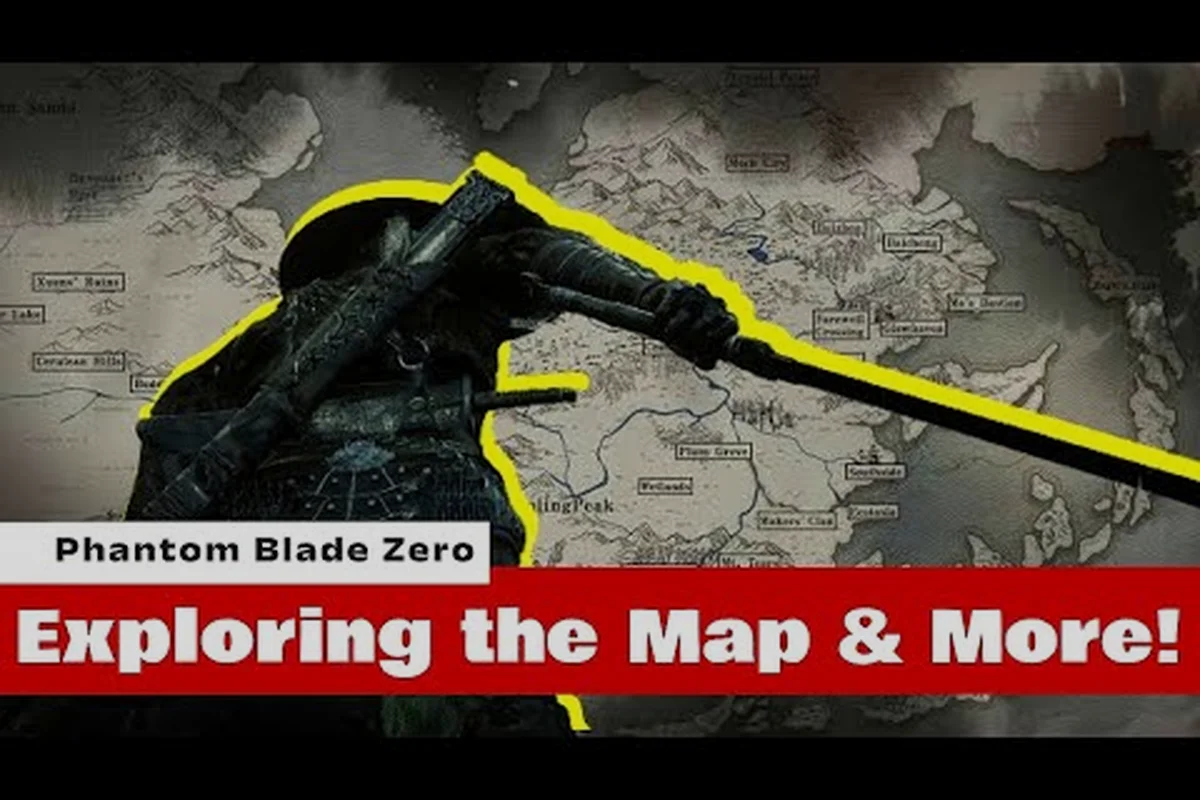
The Kungfupunk world of Phantom Blade Zero is the studio's coined identity — a deliberate collision of Wuxia philosophy, martial arts tradition, punk spirit, and clanking industrial machinery. It is what the developers at S-Game call the visual and narrative backbone of the entire game, and it shapes every blade swing you make. Understanding this art style unlocks the lore behind the Order of the Burning Tianshan, the Machine Cult, and the blurred boundary where offense becomes defense.
The Origin of Kungfupunk as a Coined Art Style
The term Kungfupunk did not exist before S-Game began shaping the identity of Phantom Blade Zero. According to the Phantom Blade Zero Official Site, the studio needed a label that captured two seemingly opposite energies — the meditative discipline of classical Chinese martial arts, and the rebellious, gear-driven chaos of cyberpunk-adjacent fiction. The result is a hybrid genre that refuses to sit cleanly inside either bucket, because the developers wanted players to feel both the silk robes and the exhaust pipes at the same time.
Wuxia philosophy supplies the soul of the Kungfupunk world. Movement in this setting is built on the idea that offense and defense are not separate actions, but two faces of the same flowing strike. A parry is a redirected attack, a dodge is a step toward a counter, and every weapon technique carries the weight of a centuries-old martial lineage. Punk spirit supplies the grit, the stitching of leather jackets over traditional hanfu, the spray-paint over temple murals, and the refusal to bow to dynasties that have already fallen.
Industrial machinery ties these two halves together. Gears, pistons, pneumatic limbs, and clockwork cores run through the streets and through the bodies of warriors who graft them onto their own limbs. The setting is not steampunk, because the machinery is never the point — it is the costume that Wuxia characters wear to express their philosophy. Players stepping into this world for the first time should expect a setting where a sword saint might dual-wield jian and a riveted gauntlet without breaking character logic.
Why S-Game Rejected Pure Steampunk
| Concept | Pure Steampunk | Phantom Blade Zero Kungfupunk |
|---|---|---|
| Cultural Root | Victorian-era industrial Europe | Chinese Wuxia lineage |
| Philosophy Source | Age of Reason, utilitarianism | Taoist duality, yin-yang flow |
| Machinery Role | Centerpiece of the world | Subordinate to martial expression |
| Hero Archetype | Inventor or airship captain | Wandering swordsman or exiled disciple |
| Aesthetic Color | Brass, sepia, soot | Indigo, cinnabar, oxidized copper |
The table above shows why S-Game had to coin a new word rather than borrow an existing genre label. Pure steampunk centers its machinery; pure Wuxia rejects machinery entirely; Kungfupunk uses machines as vessels for human expression, which is why the Phantom Blade Zero Steam page](https://store.steampowered.com/app/4115450/Phantom_Blade_Zero/) positions the art style as the first thing players should understand before reading any faction lore.
The Three Pillars of the Kungfupunk Aesthetic
The Kungfupunk world of Phantom Blade Zero stands on three load-bearing pillars, and each pillar shows up in the visual design, the soundtrack, and the combat animations. Players who can name all three will start to read environments the way designers intended them to be read, because every ruined courtyard and neon-lit forge is a deliberate blend of two traditions.
The first pillar is martial arts tradition, drawn from centuries of documented Chinese fighting styles and adapted into cinematic combat. The second pillar is punk spirit, which injects rebellion, DIY modification, and anti-authoritarian attitude into characters who would otherwise look like period-piece extras. The third pillar is industrial machinery, rendered with obsessive detail so that gear teeth, hydraulic lines, and pressure valves all carry narrative weight instead of being decoration.
When the three pillars align, a single frame can hold a master swordsman in traditional robes, executing a counter-technique that sends sparks off a piston-driven blade — and the image reads as coherent rather than confused. Players who read the PlayStation Blog introduction to Phantom Blade Zero will recognize this balance as the studio's stated creative north star from day one.
How Each Pillar Maps to Gameplay
| Pillar | Combat Translation | World Translation |
|---|---|---|
| Martial Arts Tradition | Stance chains, named techniques, discipline-based progression | Temples, dojos, ancestral halls |
| Punk Spirit | Improvised weapons, graffiti-finishers, anti-faction quests | Back-alley shrines, illegal mods |
| Industrial Machinery | Clockwork prosthetics, steam-powered archetypes | Forges, refineries, rail networks |
The mapping above is not theoretical — it is the framework the Kungfupunk world uses to make every encounter feel like a conversation between philosophy and craftsmanship. When you parry with a mechanical forearm, you are demonstrating all three pillars at once, which is why the combat feels heavier and more meaningful than a typical action-RPG parry.
Major Factions and Regions Inside the Kungfupunk World
The Kungfupunk world of Phantom Blade Zero is not a single city or a single dynasty. It is a fractured continent where several major factions contest influence, and each faction leans on a different combination of the three aesthetic pillars. Knowing which faction a region belongs to tells you what combat style you will face, what kinds of enemies will ambush you on the road, and what rewards you can expect from finishing the local quest chain.
The continent is split across at least three major regions — the mountain stronghold of Tianshan, the canal-city of Lijiang-9, and the desert refinery known as the Rust Belt. Tianshan belongs to the Order of the Burning Tianshan, a militant monastic order that fuses traditional sword discipline with reclaimed industrial weaponry. Lijiang-9 is a smuggler's haven where the Silk Circuit Syndicate trades in black-market mods, information, and ancient scrolls stolen from fallen dynasties. The Rust Belt is contested ground between the Machine Cult and the last holdouts of the Imperial Remnant Court, which still believes the old empire can be restored through blood ritual.
These factions do not exist purely for lore flavor — they drive the side content, the boss progression, and the upgrade paths you will follow throughout a typical playthrough. Players who ignore the faction system often report that combat feels harder than expected, because they have skipped the social layer that unlocks faction-specific techniques and discount vendors.
Faction Quick Reference
| Faction | Region | Combat Specialty | Aesthetic Lean |
|---|---|---|---|
| Order of the Burning Tianshan | Tianshan Mountains | Heavy sword + counter stance | Martial Arts + Machinery |
| Silk Circuit Syndicate | Lijiang-9 | Dual blades + thrown gadgets | Punk Spirit + Martial Arts |
| Machine Cult | The Rust Belt | Hydraulic limbs + AoE stuns | Machinery + Punk Spirit |
| Imperial Remnant Court | Scattered shrines | Polearms + formation buffs | Martial Arts + Tradition |
The table above is a quick-reference snapshot, but the faction dynamics shift after major story beats, because the Kungfupunk world reacts to the player's choices. Siding with the Order early may lock you out of Syndicate-exclusive finishers, while delaying the Machine Cult storyline keeps their refinery zones neutral and easier to traverse.
How the Kungfupunk World Shapes Combat and Progression
Every combat system in Phantom Blade Zero is filtered through Kungfupunk philosophy, because the studio does not separate worldbuilding from gameplay. The stance system rewards players who treat offense and defense as one continuous flow — which is the central tenet of Wuxia that the art style was built to express. A player who learns to weave parries into their attack chain will eventually unlock the Ghostep technique, a defensive reposition that doubles as an opening strike, and that single move encapsulates the entire Kungfupunk thesis in mechanical form.
Players who want a structured breakdown of how stance chains and counters actually work in combat should consult our combat guide, which maps each stance to its counter windows and stamina costs. Newcomers who are still learning how the parry timing works can follow our how to parry walkthrough, because parrying is the most Wuxia-shaped mechanic in the game — you redirect force, you do not simply block it. Dodging follows a similar philosophy, which our how to dodge guide breaks down with frame data.
The Kungfupunk world also explains why Sha-Chi exists as a resource — the concept of negative energy spent through aggression maps cleanly onto Wuxia duality, where every strike builds and releases tension. Players who want to understand how Sha-Chi interacts with the Breached State can read our Breached state recovery guide and our Sha-Chi guide to see the system as a whole rather than a series of disconnected meters.
Combat Pillar Mapping
| Mechanic | Wuxia Source | Punk Source | Machinery Source |
|---|---|---|---|
| Stance Chains | Named form continuity | Improvised combos | Hydraulic joint transitions |
| Parry | Yield-and-redirect | Rebuff authority | Counter-piston feedback |
| Ghostep | Shadow-step tradition | Vanish from CCTV | Steam-puff distraction |
| Sha-Chi | Duality of strike | Reckless overflow | Pressure venting |
The mapping above is useful because it lets players troubleshoot why a particular mechanic feels off when they try it. If a parry feels too rigid, the issue is that they are playing the machinery column rather than the Wuxia column. If a dodge feels too floaty, they are missing the punk-spirit willingness to abandon posture in favor of repositioning.
Cultural References and External Influences in the Kungfupunk World
The Kungfupunk world of Phantom Blade Zero draws from a surprisingly wide cultural library, and recognizing the references deepens the experience for players who care about lore. The Wuxia lineage pulls from Jin Yong novels, wuxia film cinematography, and classical Chinese philosophy texts that the development team has cited in interviews. The punk spirit draws from late-1970s visual culture, DIY modification scenes, and the cyberpunk literary canon of authors like William Gibson, although the studio has been careful not to lean so far into cyberpunk that the art style becomes indistinguishable from its Western counterpart.
The industrial machinery layer borrows from real-world engineering references — clockwork automata, Victorian-era calculating machines, and modern pneumatic systems — but filters them through an East Asian visual grammar. The result is a setting where a pressure gauge might be decorated with cloud motifs, and a steam vent might exhale in shapes that resemble calligraphy strokes. Players who notice these details report a stronger sense of immersion, because the world feels authored rather than assembled.
The studio has confirmed in its Wikipedia entry for Phantom Blade Zero that Kungfupunk is intended to be a lasting creative identity rather than a one-off marketing label. That distinction matters for lore enthusiasts, because it means future entries in the franchise will likely continue building the same world rather than resetting the aesthetic. Players investing time in learning Kungfupunk lore now are therefore investing in a setting that the studio plans to grow.
Frequently Asked Questions
What does Kungfupunk mean in Phantom Blade Zero?
Kungfupunk is the studio S-Game's coined art style for the game, combining Wuxia martial arts tradition, punk spirit, and industrial machinery into a single visual identity.
Is the Kungfupunk world the same as steampunk?
No. Steampunk centers Victorian-era machinery as the main attraction, while the Kungfupunk world uses machinery as a costume for martial arts philosophy, with Wuxia traditions driving the narrative.
Which faction should I join first in the Kungfupunk world?
The Order of the Burning Tianshan is recommended for new players, because its counter-stance combat style teaches the Wuxia philosophy that underpins the Kungfupunk world's combat systems.
Does Kungfupunk influence gameplay or only visuals?
It influences both. Stance chains, parry timing, and Sha-Chi resource management all flow from the Wuxia duality concept that the Kungfupunk world was built to express.
Will the Kungfupunk world expand in future Phantom Blade Zero updates?
The studio has stated that Kungfupunk is a long-term creative identity, which means new regions, factions, and combat styles are likely to extend the same world rather than replace it.